

Table Of Contents
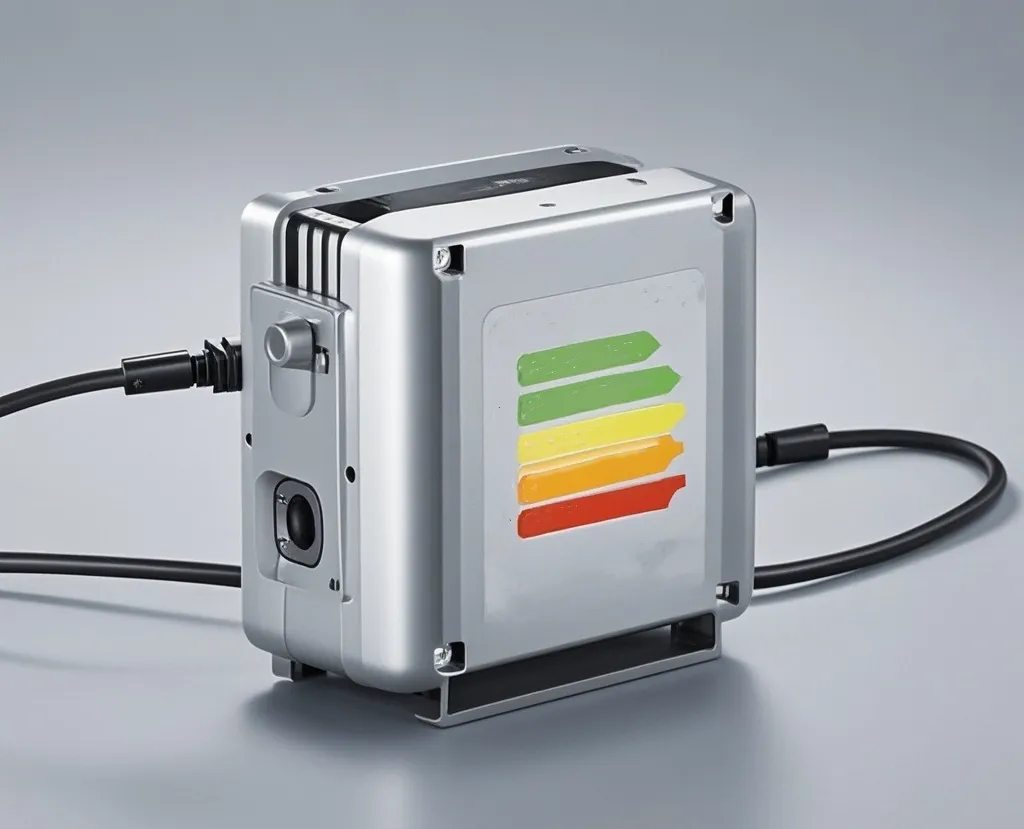
In recent years, environmental issues have become a global issue, and environmental protection needs to be supported in all fields. The requirements for energy saving in the power supply field have also become more stringent, and corresponding standards have been formulated not only for conversion efficiency but also for standby power consumption. Moreover, as an important part of reducing environmental load, the requirements for reducing industrial waste are getting higher and higher.
Conversion efficiency
High conversion efficiency is a key indicator for energy saving in AC/DC converters. The higher the conversion efficiency, the less energy is lost in the process of converting AC power to DC power. This means that more input power can be effectively converted into output power, reducing unnecessary energy waste.
In order to improve conversion efficiency, AC/DC converters usually use advanced circuit design and efficient power semiconductor devices. For example, the use of synchronous rectification technology can reduce energy loss in the rectification process; optimizing the design and material selection of transformers can reduce core loss and coil resistance loss.
| Application Scenario | Full-load Conversion Efficiency Requirement |
| Power relatively small consumer electronics products | Above 85% |
| Industrial applications, data centers, etc. | 90% or even higher |
| High-end AC/DC power modules (under specific input and output conditions) | Above 95% |
Conversion efficiency
Power factor correction
Good power factor correction function helps to improve energy utilization efficiency. Low power factor will lead to an increase in reactive power in the power grid, which will increase the burden on the power grid and waste energy.
The AC/DC converter should have a power factor correction function to make the phase of the input current and input voltage as close as possible, thereby improving the power factor, reducing the adverse impact on the power grid, and achieving energy saving.
Standby power consumption
When the device is in standby mode, the standby power consumption of the AC/DC converter should be as low as possible. Many electronic devices still consume a certain amount of power in standby mode. Although the standby power consumption of a single device may be small, the total standby power consumption of a large number of devices cannot be ignored.
By optimizing the circuit design and using low-power chips and components, the standby power consumption of the AC/DC converter can be reduced to achieve energy saving.

Dynamic load response
In practical applications, the load of electronic equipment usually changes dynamically. The AC/DC converter should be able to respond to load changes quickly and accurately, maintain a stable output voltage, and avoid excessive energy loss during load changes.
Good dynamic load response capability can improve the overall energy efficiency of the system and reduce energy waste caused by load changes.
Adapt to wide input voltage range
AC/DC converters that can adapt to a wider input voltage range can work stably under different grid voltage conditions and reduce energy loss caused by voltage fluctuations.
For example, in some areas where the grid voltage is unstable, AC/DC converters with a wide input voltage range can ensure the normal operation of equipment while improving energy utilization efficiency.
In summary, AC/DC converters need to meet the requirements of high conversion efficiency, good power factor correction, low standby power consumption, excellent dynamic load response and adaptability to a wide input voltage range in terms of energy saving to achieve more efficient energy utilization.