

Table Of Contents
All electronic devices require power, and the active power provided by an energy source or grid is never stable or noise-free. When you need to convert grid power to DC power, or are working with a fluctuating DC power source, you will need a DC-DC converter to regulate and keep the output voltage at the desired value.
A key component in a DC-DC converter is the inductor on the output stage, and the choice of the DC-DC converter inductor is one of many important design choices required for a successful design. Switching DC-DC converters use inductors for voltage regulation along with a few other components. The role of an inductor in a circuit will be slightly different in different topologies, depending on whether the system is stepping up or stepping down. Let’s look at two common groups of topologies where the inductor provides different functions in the circuit, and how to choose the appropriate inductor size.
DC-DC Converter Inductor Selection
The process of selecting an inductor for a DC-DC converter depends on many parameters. Depending on the power levels involved, these inductors can be quite large and may need to be custom designed for your system. In addition to the required footprint, the following specifications need to be considered when selecting a DC-DC converter inductor:
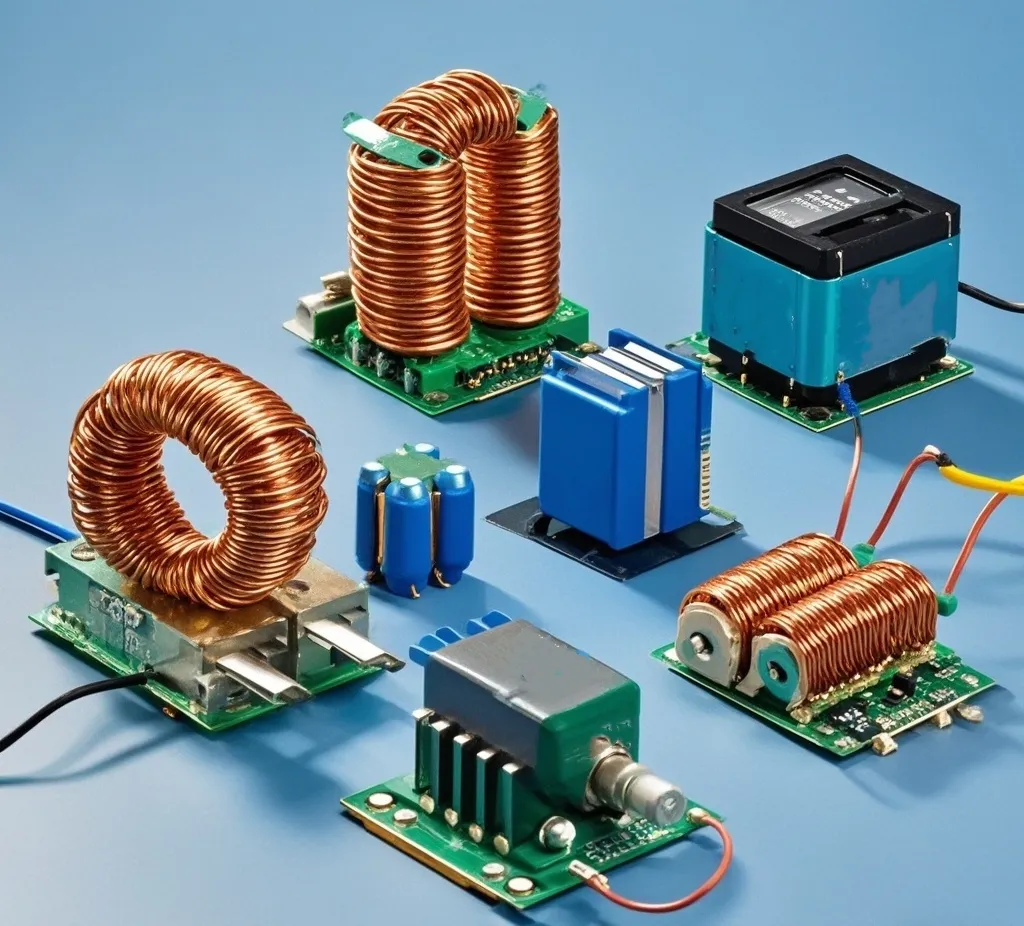
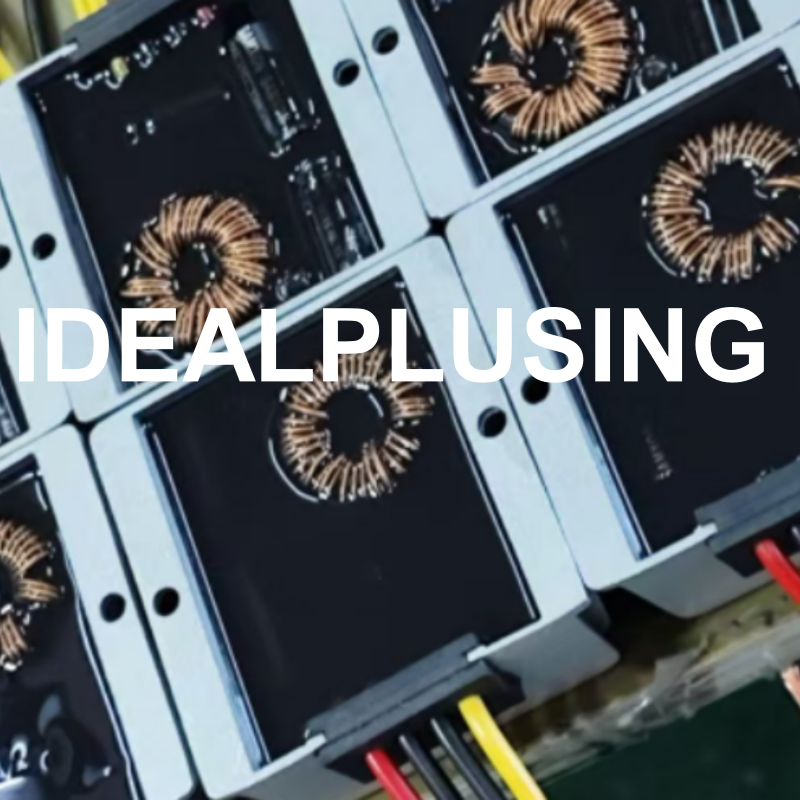
Current rating and coil resistance. The coil itself will have some DC resistance, which will generate heat and reduce the voltage across the inductor. The coil resistance should be as low as possible to prevent power loss and heat. Additionally, the current rating will depend on the physical size of the inductor package. Wirewound inductors are used for high power converters, while foil inductors can be used for low power converters.
Saturation current. Ferrite inductors will have some saturation current above which the inductor core will saturate. This will create hysteresis in the next switching cycle. The inductor should be selected so that the saturation current is greater than the maximum current required in the system.
Inductance vs. frequency. All components have parasitics. Parasitic capacitance between windings and resistance in the coil can cause the system to self-resonate at high frequencies. In practice, the self-resonant frequency of an inductor is usually quite high, so unless you plan on using PWM signals with very fast edge rates and ~MHz frequencies, this won’t really matter.
Buck, Boost and Cuk Converter Inductor Selection
The buck, boost and buck-boost converter topologies, as well as the related Cuk and Split-Pi converters, all utilize an inductor to store energy when the power MOSFET in the circuit is activated during switching. Each time the inductor switches, the current flowing through the inverter begins to change at a rate similar to the rise/fall time of the PWM signal, and the inductor will generate back EMF.
These converter topologies utilize the back EMF in the inductor during the switching process, which allows these converter topologies to operate at lower voltages because the role of the inductor is twofold:
Storing and releasing during the switching event. Each time the PWM signal turns the MOSFET in the circuit on and off, the PWM signal changes direction, ultimately directing current to the load and ensuring DC operation. Here, it is the position of the inductor in the different topologies that will help determine whether the system operates in buck or boost mode.
Limiting ripple on the converter output. An inductor has a reactive property that is proportional to frequency, so the ripple waveform that would be generated during each PWM switching cycle will drop significantly across the inductor. This means that larger inductor values are more useful for attenuating high-frequency ripple.
In high-power systems, choosing the right DC-DC converter inductor is important for ensuring system stability, improving efficiency, meeting electromagnetic compatibility requirements, and adapting to different working conditions. When selecting an inductor, it is necessary to comprehensively consider the specific needs of the system, working conditions, and performance requirements to select the most suitable inductor product.