
Table Of Contents
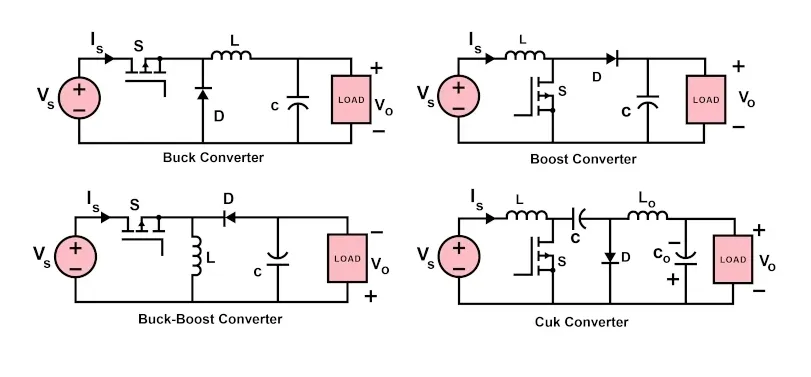
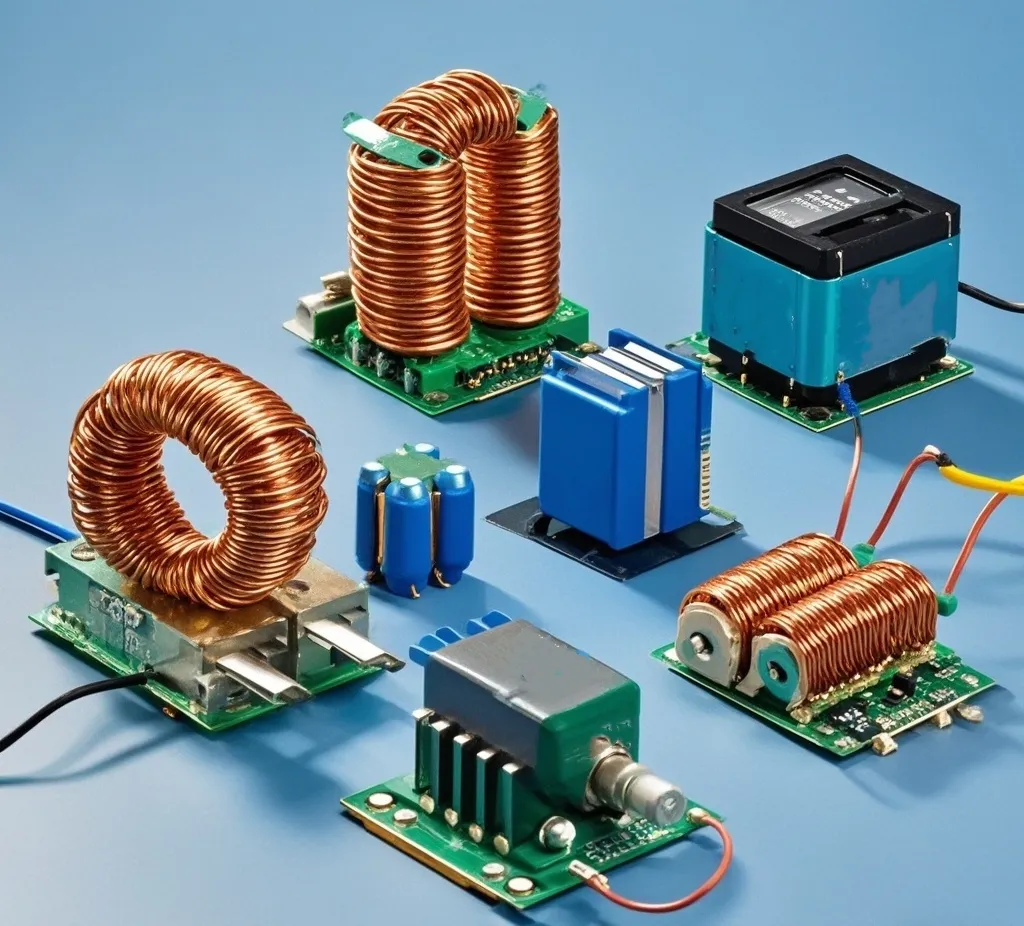
The DC/DC converter uses the MOSFET switch to store energy in the inductor and generate current when it is closed. When the switch is open, the stored inductor energy is output to the load through the diode.
The best switching DC converter is the one that can meet the overall needs of the system with the lowest installation cost. This can be measured by a set of parameters that describe the performance of the switching DC converter, including: high efficiency, small installation size, small quiescent current, small operating voltage, low noise, high functional integration, sufficient output voltage regulation capability, and low installation cost.
Working efficiency of DC converter
① Inductive DC/DC converter: The conversion efficiency of battery-powered inductive DC converter is 80%~85%, and its loss mainly comes from the external diode and modulator switch.
② Charge pump without voltage regulation: It is a basic charge pump. It has a high power conversion efficiency (generally more than 90%), because the loss of the charge pump mainly comes from the ESR of the capacitor and the on-resistance (RDS-ON) of the internal switch tube, both of which can be made very low.
③ Charge pump with voltage regulation: It is a linear regulator with a low voltage drop added after the output of the basic charge pump. Although voltage regulation is provided, its efficiency is reduced due to the power consumption of the back-end regulator. To achieve the highest efficiency, the output voltage of the charge pump should be as close as possible to the voltage adjusted by the back-end regulator.
The best choice is: a charge pump without voltage regulation (in applications where strict output regulation is not required), or a charge pump with voltage regulation (if the voltage difference across the back-end regulator is small enough).
Installation size
① Inductive DC converter: Although many new inductive DC converters are available in SOT packages, they usually still require external inductors with larger physical dimensions. In addition, the circuit layout of the inductive DC converter itself also requires a larger board space (additional decoupling, special ground wire processing, shielding, etc.).
② Charge pump without voltage regulation: The charge pump does not use an inductor, but requires an external capacitor. New charge pump devices use SOP packages and operate at higher frequencies, so small capacitors (1μF) that take up less space can be used. The space occupied by the charge pump IC chip and external capacitors combined is not as large as the inductor in the inductive DC/DC converter. It is also easy to obtain a positive and negative combination of output voltages using a charge pump.
③ Charge pump with voltage regulation: Adding a discrete back-end voltage regulator takes up more space, but many of these regulators have SOT packages, which relatively reduces the space occupied. New charge pump devices with voltage regulation, such as the TCM850, integrate the charge pump, back-end voltage regulator, and shutdown control in a single 8-pin 50lC package.
The best options are: no voltage regulation or with voltage regulation charge pump.
Quiescent current
① Inductive DC/DC converter: Frequency modulation (PFM) Inductive DC/DC converter is a switching DC/DC converter with the lowest quiescent current. Voltage regulation through frequency modulation can minimize the supply current under small load current.
② Charge pump without voltage regulation: The quiescent current of the charge pump is proportional to the operating frequency. Most new charge pumps operate at frequencies above 150kHz, so capacitors of 1μF or even less can be used. To overcome the problem of high quiescent current, some charge pumps have a shutdown input pin to shut down the charge pump when idle for a long time, thereby reducing the supply current to near zero.
③ Charge pump with voltage regulation: The back-end voltage regulator increases the quiescent current, so the charge pump with voltage regulation is worse than the basic charge pump in terms of quiescent current.
The best choice is: inductive DC/DC converter, especially frequency modulation (PFM) switching type.
Minimum operating voltage
① Inductive DC/DC converter: Inductive DC/DC converters dedicated to battery power supply can start working at a voltage as low as 1V or even lower, so they are very suitable for single-cell battery-powered electronic devices.
② Charge pump without voltage regulation/charge pump with voltage regulation: The minimum operating voltage of most charge pumps is 1.5V or higher, so they are suitable for applications with at least two batteries.
The best choice is: inductive DC/DC converter.
Generated noise
Inductive DC/DC converter: Inductive DC/DC converters are the source of power supply noise and switching radiation noise (EMI). Broadband PFM inductive DC/DC converters will generate noise in a wide frequency band. The operating frequency of the inductive DC/DC converter can be increased so that the noise it generates falls outside the frequency band of the system.